


Avoid Scalds: 5 Thermostatic Mixer Tap Benefits for UK Homeowners
Thermostatic mixer taps are the safest way to keep shower and bath temperatures stable, and that stability is what makes them worth the extra cost for most households. They hold water within a tight temperature band and shut off automatically if the cold supply fails, protecting against scalds. Built to TMV2 or TMV3 standards, they suit families, elderly residents and homes with fluctuating pressure. A range of compatible fittings are available; the sections below explain how they work and what to check before buying.
TL;DR:
- Thermostatic mixer taps automatically compensate for pressure and temperature fluctuations, ensuring consistent water temperature and enhanced safety.
- They cut off hot water immediately if the cold supply drops or fails, preventing scalding in scenarios like flushing toilets or other household demands.
- Suitable for households with children, elderly residents, combi boilers, or multiple users, especially in multi-bathroom setups or during bathroom renovations.
- Proper installation and periodic servicing by a qualified plumber are crucial to maintain reliability and the anti-scald safety feature over time.
- Although priced higher than manual mixers, their safety, water savings, and comfort benefits typically justify the initial investment.
Table of Contents
- What is a thermostatic tap and how does it deliver these benefits?
- How thermostatic taps protect against scalding
- Comfort gains: temperature stability and lower water waste
- Who benefits most from a thermostatic mixer tap?
- Installation, maintenance and how long a thermostatic valve lasts
- Why Simcodirect backs thermostatic as the safer default
- Finding the right fittings for your bathroom upgrade
- Sources
- FAQ
What is a thermostatic tap and how does it deliver these benefits?
A thermostatic tap works differently from a standard mixer because it contains a thermostatic cartridge, usually made from a wax or piston element that expands and contracts as water temperature changes. That movement physically adjusts the ratio of hot to cold water flowing through the valve, holding the output at whatever temperature you set, regardless of what else is happening elsewhere in the plumbing system.
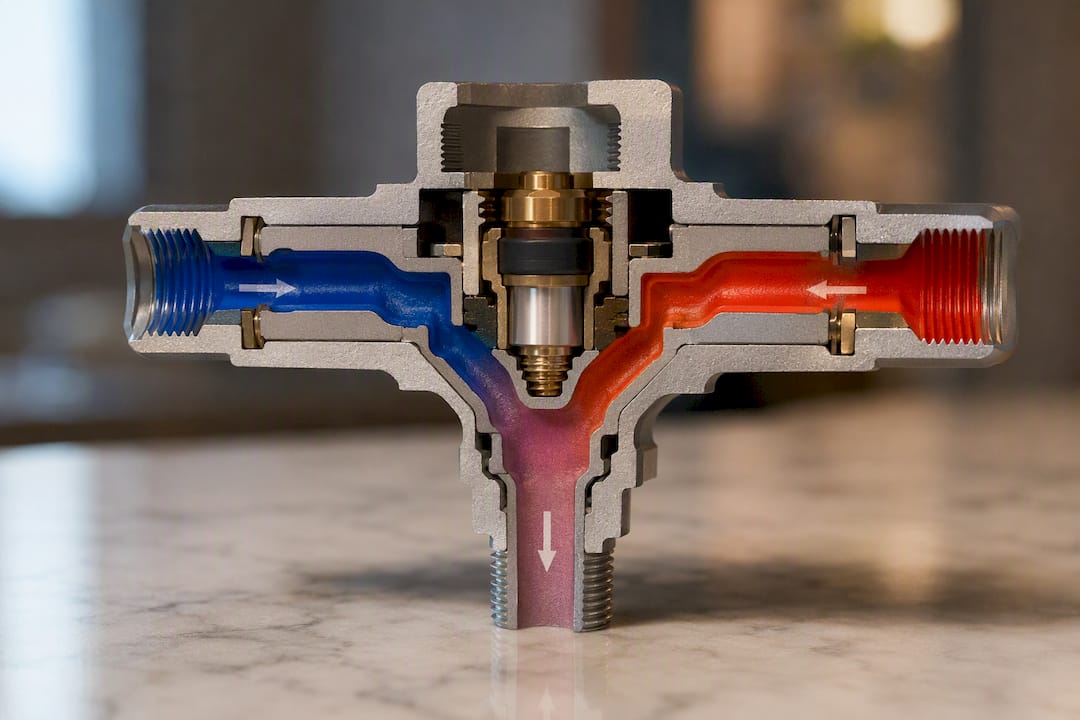
This is the core of thermostatic tap advantages over a manual or pressure-balance mixer. A pressure-balance valve reacts only to pressure changes between hot and cold supplies, so it can still let temperature drift if, say, your combi boiler’s flow rate shifts. A thermostatic valve reacts to the actual temperature, maintaining a constant outlet reading by automatically remixing hot and cold supplies as conditions change.
The practical differences that matter to a household:
- Thermostatic cartridges compensate automatically for changes in supply pressure or temperature, without you touching the tap.
- If the cold feed fails or drops significantly, the valve restricts or shuts off the hot flow rather than letting scalding water through.
- Manual and simple pressure-balance mixers require you to react and readjust; a thermostatic valve does that work internally, continuously.
That failsafe behaviour is the single biggest reason people ask why choose thermostatic mixers over anything cheaper.
How thermostatic taps protect against scalding
Anti-scald protection is the headline safety feature, and it works through a straightforward mechanical response rather than any electronics. When the thermostatic element senses the water climbing above your set temperature, usually because the cold supply has weakened or been interrupted, it moves to cut hot flow immediately. You get a rapid drop toward cold, or a full stop, instead of a sudden burn.
Picture the scenario every household has lived through: someone flushes the loo or starts the washing machine while another person is in the shower. On a standard mixer, that dip in cold pressure can send scalding water through the shower head in seconds. On a thermostatic valve, the outlet temperature stays within a small band, often within a small temperature band, because the cartridge is already compensating before you even notice a change.
Anti-scald response: thermostatic valves are designed to reduce or shut off hot water flow automatically the moment the cold supply drops, rather than requiring manual adjustment.
This is why thermostatic mixer taps are specified by name in UK safety guidance for vulnerable users. Two grades matter here:
- TMV2 covers domestic settings, including family bathrooms and general household use.
- TMV3 applies to healthcare and higher-risk commercial settings where anti-scald tolerances are tighter and testing is more frequent.
Even in a domestic bathroom, it’s worth having a qualified plumber install and periodically test the valve, since selecting the correct TMV type for the setting is part of what keeps the failsafe behaviour reliable over years of use.
Comfort gains: temperature stability and lower water waste
Beyond safety, thermostatic control changes the daily experience of using a shower or bath. You set a temperature once, and the tap holds it, so there’s no fiddling with hot and cold knobs while water runs down the drain unused.
That matters more than it sounds. Thermostatic mixers reduce the time and water wasted while adjusting to a comfortable temperature compared with manual mixers, where most people run water for a stretch before it feels right. Multiply that across a household showering twice a day, and the savings on both water and the energy used to heat it add up over a year, even without an exact figure to quote.
Key comfort and efficiency points:
- Thermostatic mixers reach and hold a set temperature faster than manual taps, cutting the “too hot, too cold” fiddling stage.
- Because the valve responds to changes in real time, thermostatic showers react instantly to pressure shifts elsewhere in the property, so you’re not constantly re-adjusting.
- Homes on combi boilers, where flow and temperature can swing when other taps open, benefit particularly from this stability.
- Large overhead or rainfall shower heads need decent flow to perform well, so check your system’s flow rate before pairing one with a thermostatic valve.
For anyone weighing up mixer tap safety features against a straightforward manual model, this is where the case tips firmly toward thermostatic.
Who benefits most from a thermostatic mixer tap?
Not every bathroom needs one, but most modern UK households do gain something real from the upgrade. Here’s how to think about it:
- Families with young children or elderly residents. These are the households where anti-scald protection matters most, since reaction time to sudden temperature spikes is often slower.
- Homes with combi boilers or shared plumbing. If your hot water pressure dips when someone else uses a tap or the washing machine, a thermostatic valve is recommended specifically for properties where hot-water use elsewhere causes fluctuation.
- Multi-bathroom houses with several people showering around the same time. The more simultaneous demand on your hot water system, the more a thermostatic valve earns its keep.
- Renovators upgrading an older bathroom. Many advisers now treat thermostatic fittings as a modern standard for family bathrooms rather than a premium extra.
- A stable, single-occupant en-suite on a dedicated unvented cylinder is the one scenario where a simpler mixer might genuinely suffice, since pressure fluctuation is less likely.
If you’re unsure which valve type suits your setup, ask a qualified plumber to check your system before you buy. TMV2 covers the vast majority of domestic cases; TMV3 is rarely needed outside commercial or healthcare settings.
Installation, maintenance and how long a thermostatic valve lasts
Thermostatic valves are less forgiving of poor installation than basic mixers, so a qualified installer isn’t optional here. Getting it wrong doesn’t just mean a wobbly temperature; it can defeat the anti-scald failsafe entirely.
Before fitting, check that:
- Hot and cold supply pressures are reasonably balanced, since large mismatches can affect how well the cartridge compensates.
- You’ve decided between concealed and exposed valve bodies, since concealed installations look neater but need an accessible service panel for future cartridge work.
- Flow rates suit your fittings, particularly if you’re pairing the valve with a large shower head.
Once installed, thermostatic cartridges need occasional attention. Hard water and general debris can affect the mechanism over time, and periodic testing keeps the failsafe reliable. Servicing frequency depends on water hardness and usage, but a sluggish or drifting temperature response is usually the first sign a cartridge needs checking.
Pro Tip: Fit an inline strainer on the supply line during installation. It’s a small addition that catches debris before it reaches the thermostatic cartridge, and it can meaningfully extend the valve’s service life.
On cost: thermostatic mixers sit above manual taps on price, but the gap has narrowed as they’ve become standard fittings. Weighed against reduced water waste, fewer wasted degrees of heated water, and the safety margin for anyone in the household, most renovators find the higher upfront spend pays for itself over the tap’s working life. If you’re planning a wider refresh, our bathroom taps buyers’ guide and small bathroom modernisation ideas are worth reading alongside this.
Why Simcodirect backs thermostatic as the safer default
Every technical case made in this article points the same way: thermostatic control isn’t a luxury add-on, it’s the sensible baseline for most UK bathrooms. Simcodirect stocks a range of taps and fittings built around exactly this principle, alongside guide pages covering related upgrades like boiling water tap installation and radiator planning for bathroom heating layouts.
What’s worth saying plainly: the anti-scald benefit only holds if the valve is installed and tested correctly. That’s not a Simcodirect claim, it’s basic plumbing physics, and it’s why every recommendation here comes with the same advice: get a qualified installer involved, and don’t skip the periodic testing once the tap is in. Readers planning a full refurbishment should also think about how fittings coordinate, including something as ordinary as bathroom door choice, which affects ventilation and moisture around the fittings you’ve just invested in.
— Carl
Finding the right fittings for your bathroom upgrade
If you’re ready to move from research to buying, start by checking your household’s water pressure and boiler type, since that determines which thermostatic fittings will actually perform well in your bathroom. Product ranges cover taps, heating and washroom essentials that pair naturally with a thermostatic upgrade, whether refreshing a family bathroom or fitting out a rental property.
While you’re planning the wider room, it’s worth looking at what else needs replacing alongside the tap. A Dimplex Q-Rad panel heater or a Titan chrome towel radiator often gets swapped out at the same time as the taps during a renovation, since both jobs disturb the same pipework. If you’re unsure exactly what your system can support, a quick chat with a qualified installer before you order will save you a return trip. Browse the full range on the Simcodirect site, check stock, and get your fittings ordered with UK delivery built in.
Sources
- Thermostatic mixing valve (Comfort Services Group)
- Why a thermostatic shower could be the smartest upgrade for your bathroom (Triton Showers)
- Thermostatic showers explained: how they work & why they matter (My Bathroom Specialist)
- What is a thermostatic shower and how do they work? (Homebuilding)
FAQ
What’s the difference between a thermostatic mixer tap and a regular mixer tap?
A regular mixer only balances pressure between hot and cold; a thermostatic mixer senses actual water temperature and adjusts the internal cartridge to hold that exact setting, shutting off hot flow automatically if the cold supply fails.
What are the downsides of thermostatic showers?
They cost more upfront than manual mixers, need a qualified installer to set up correctly, and the cartridge can be sensitive to limescale or debris without an inline strainer or occasional servicing.
What common problems affect thermostatic mixer showers?
The most frequent issues are scale build up inside the cartridge, temperature drift from unbalanced supply pressures, and reduced flow if the valve wasn’t matched to the property’s water system during installation.
Are mixer tap showers any good?
Basic mixer showers work fine in stable, low-fluctuation plumbing, but for most UK homes with combi boilers or shared bathrooms, a thermostatic mixer gives noticeably better safety and comfort thanks to its automatic temperature compensation.
Do I need a plumber to fit a thermostatic mixer tap?
Yes. Correct installation, matched supply pressures and periodic testing are essential to keep the anti-scald failsafe working as intended, so a qualified installer is strongly recommended rather than optional.