


Space saving bathroom fittings types: your 2026 guide
Space-saving bathroom fittings are fixtures and furniture designed to maximise function and style in compact bathrooms by reducing physical footprint and visual clutter. The industry term for this category is “compact sanitary ware,” though homeowners and designers alike use space-saving fittings as the working descriptor. Whether you rent a flat with a narrow en suite or own a terrace house with a single family bathroom, the right compact bathroom fixtures can transform a cramped room into one that feels considered and calm. The primary goal in 2026 is reducing visual clutter with floating elements that extend perceived floor area, not just shrinking the size of individual pieces.
1. What are wall-hung bathroom fittings and their benefits?
Wall-hung toilets and basins are the single most impactful space saving bathroom fittings types available to homeowners today. By fixing the unit directly to the wall and concealing the cistern inside a frame, you free the floor beneath entirely. Wall-hung basins save around 100mm of floor depth compared to pedestal alternatives. That 100mm translates directly into easier movement and a less cluttered sightline.
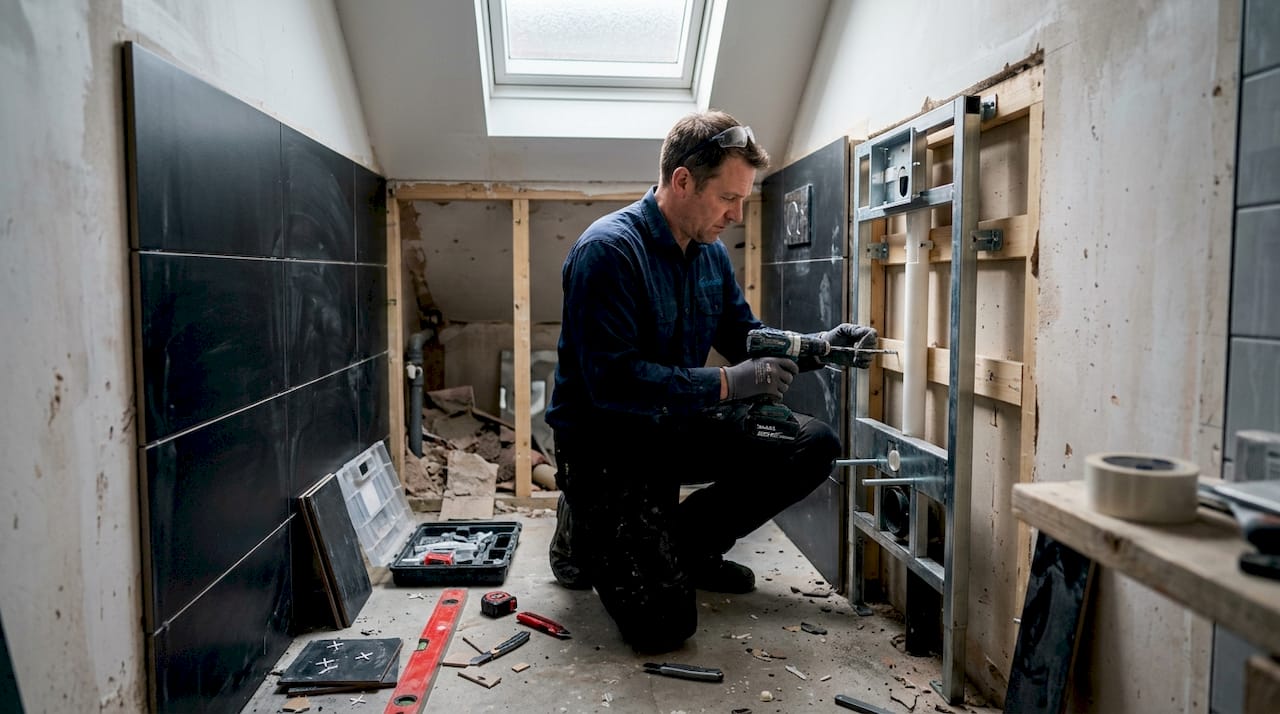
The installation requires a steel or timber frame fixed to the structural wall, not just the plasterboard. Skipping proper reinforcement is the most common mistake, and it leads to cracked tiles and loose fittings within months. Proper structural reinforcement is non-negotiable for any wall-hung installation to remain durable.
Beyond space, wall-hung fittings are easier to clean. Visible floor area beneath the basin and toilet lets you mop without obstacles. Floating furniture and basins also trick the eye into perceiving a larger room, which is a genuine psychological effect backed by interior design research.
Key benefits at a glance:
- Frees floor space and improves circulation
- Conceals pipework inside the wall cavity
- Simplifies floor cleaning
- Creates a modern, uncluttered aesthetic
- Available in short-projection formats for even tighter spaces
Pro Tip: Choose a short-projection pan of 480mm or less paired with a wall-hung basin under 500mm wide. This combination reclaims the most floor area without sacrificing usability.
2. How corner bathroom fittings optimise odd spaces
Corners are the most wasted area in any small bathroom. Standard rectangular fittings leave a dead triangle of unusable space in every corner. Corner-specific fittings reclaim that triangle and convert it into functional floor plan. Corner basins can be as compact as 400x400mm, making them ideal for cloakrooms and narrow en suites.
The main corner fitting types include:
- Corner basins: Triangular or quadrant-shaped, fitting flush into a 90-degree angle
- Corner toilets: Short-projection pans designed to sit diagonally in a corner
- Corner shower enclosures: Quadrant or square enclosures that use two walls as sides
- Corner storage units: Tall slimline towers that stack vertically rather than spreading outward
The practical advantage goes beyond dimensions. Placing the toilet or basin in a corner frees the central floor area, which improves movement flow between the door, shower, and towel rail. That central clearance is what makes a small bathroom feel usable rather than awkward.
Pro Tip: Pair corner fittings with a sliding or pocket door rather than a hinged one. A standard door swing can consume up to 0.5 square metres of usable floor space, which entirely negates the gains from corner fixtures.
3. The advantages of wet rooms and trayless showers as space savers
A wet room is a fully waterproofed bathroom where the shower has no enclosure or tray. Water drains directly through a linear drain set into the floor. This design removes the visual barrier of a shower screen and the physical step of a tray, opening the entire room to feel like one continuous space.
The installation requirements are specific and unforgiving:
- The floor must be tanked (fully waterproofed) across its entire surface, not just beneath the drain.
- The floor gradient must be precisely 1:80 towards a linear drain to guarantee correct water flow.
- All wall junctions must be sealed with a flexible waterproofing membrane before tiling.
- A qualified installer must carry out the work. Incorrect tanking causes leaks through ceilings months after completion, often requiring full strip-outs to repair.
Compared to a traditional shower enclosure, a wet room removes the frame, the tray, and the door from the visual field entirely. The result is a bathroom that reads as larger even when the square footage is identical. Cleaning is also simpler: no tray edges or frame channels to scrub.
Pro Tip: Specify a linear drain along one wall rather than a central point drain. A wall-edge drain allows large-format tiles to run uninterrupted across the floor, which strengthens the sense of space.
4. Storage-focused fittings: recessed niches, mirrored cabinets, and slim furniture
Storage is where most small bathrooms fail. Freestanding shelves and bulky cabinets eat into the room. The answer is fittings that live inside the wall or sit flush against it. Recessed shelves and niches reduce clutter without protruding, preserving the bathroom footprint while increasing usable storage.
A recessed niche is cut between wall studs and tiled to match the surrounding wall. It provides a shelf for shampoo bottles, soap, and accessories without adding a single millimetre to the room’s depth. The niche works best in a shower zone, where it replaces a caddy or freestanding shelf entirely.
Mirrored cabinets serve two functions at once. They provide concealed storage behind a reflective surface, which bounces light around the room. LED-integrated mirrors replace multiple light fixtures and improve brightness and spatial perception simultaneously. A recessed mirrored cabinet set into the wall rather than surface-mounted takes this further, sitting completely flush with the plasterboard.
Slimline floating furniture units complete the picture. A wall-hung vanity unit under 300mm deep provides a basin, storage, and a clean visual line without touching the floor. Coordinating the finish across the vanity, mirror frame, and accessories creates visual cohesion that makes the room feel intentional rather than assembled from mismatched parts.
Key storage fitting types:
- Recessed wall niches: Built between studs, tiled flush, zero protrusion
- Mirrored medicine cabinets: Surface or recessed, with or without integrated LED lighting
- Floating vanity units: Wall-hung, under 300mm deep, available in matt and gloss finishes
- Slimline tall units: Vertical storage towers under 200mm deep for toiletries and towels
- Recessed sanitary bins: Built into the partition wall, keeping the floor clear
Pro Tip: Choose one finish for all metal hardware: brushed nickel, chrome, or matt black. Mixing finishes in a small bathroom fragments the eye and makes the space feel busier than it is.
5. Multi-functional fittings that maximise utility in small bathrooms
Multi-functional fittings serve more than one purpose from a single footprint. They are the most space-efficient category of compact bathroom fixtures because they eliminate the need for separate items entirely.
The most useful types include:
- Heated towel rails: Warm towels and heat the room simultaneously, removing the need for a separate radiator. A slim electric towel radiator mounts flat to the wall and draws minimal depth.
- Fold-away shower seats: A folding shower seat folds flat against the wall when not in use, freeing the shower zone for standing use.
- Combined basin-toilet units: A single unit integrates a small hand basin above the cistern, using the toilet’s waste water to rinse hands before it enters the cistern. These are particularly effective in cloakrooms under 1.2 metres wide.
- Wall-mounted toilet brush holders: A wall-mounted brush holder keeps the floor clear and removes a freestanding item from the visual field.
- Compact baths in the 1,350–1,600mm range: Smaller-format baths maintain bathing functionality and resale appeal while freeing floor space compared to a standard 1,700mm bath.
Modern heating options also contribute to space efficiency. Underfloor heating removes the radiator from the wall entirely. Where a wall-mounted heater is preferred, slim panel designs sit within 60mm of the wall surface and heat the room without dominating it. The aesthetic contribution of minimal hardware is real: fewer objects on walls and floors make the room read as larger, even before a single measurement changes.
For a broader view of how accessories contribute to a well-planned bathroom, the modern bathroom accessories guide from Simcodirect covers current trends in minimal and functional fittings for 2026.
Key takeaways
The most effective approach to space-saving bathroom fittings combines floating fixtures, recessed storage, and multi-functional accessories to maximise both physical and perceived space.
| Point | Details |
|---|---|
| Wall-hung fittings free floor space | Short-projection pans and wall-hung basins each reclaim around 100mm of floor depth. |
| Corner fittings reclaim dead space | Corner basins from 400x400mm convert unused angles into functional fixtures. |
| Wet rooms require precise installation | A 1:80 floor gradient and full tanking are mandatory to prevent leaks. |
| Recessed storage adds depth without bulk | Niches and flush-mounted cabinets provide storage without reducing floor area. |
| Multi-functional fittings reduce item count | Heated towel rails, fold-away seats, and combined units serve two purposes from one footprint. |
Why I always start with the floor plan, not the fittings catalogue
Most homeowners approach a small bathroom renovation the wrong way. They browse fittings first and try to fit them into the room afterwards. The result is a bathroom that technically contains everything but feels cramped because the spatial logic was never established.
My experience is that the single most valuable thing you can do before buying anything is to draw the floor plan to scale and mark the door swing, the window, and the existing waste pipe positions. Those three constraints determine which space saving bathroom fittings types will actually work in your room. A corner basin is useless if the waste pipe runs along the opposite wall and the floor cannot be re-routed.
The second thing I have learned is that visual space matters as much as physical space. Two bathrooms with identical square footage can feel completely different depending on how much floor is visible. Floating fixtures, large-format tiles with minimal grout lines, and layered lighting with LED mirrors do more for perceived space than any single fitting choice.
The trend I find most interesting in 2026 is the move towards soft-edged fixtures. Rounded basins, curved shower niches, and oval mirrors reduce the visual sharpness of a small room. Sharp corners and hard lines make a tight space feel more confined. Soft shapes do the opposite, and the effect is surprisingly pronounced even in rooms under four square metres.
One caution I give every homeowner: do not attempt wall-hung installations without a qualified plumber and a structural assessment. The savings from a DIY approach disappear quickly when a poorly anchored cistern frame cracks the wall tiles eighteen months later.
— Carl
Simcodirect’s range for compact bathroom projects
Fitting out a small bathroom is easier when the products are designed with tight spaces in mind from the start.
Simcodirect stocks a curated range of wall-mounted accessories, slimline storage units, and space-conscious fittings suited to compact bathrooms in homes and rental properties. The range includes recessed sanitary bins that sit flush within partition walls, folding shower seats that disappear when not needed, and wall-mounted toilet brush holders that keep floors clear. For heating, slim electric towel radiators such as the Dimplex TTR Electric Towel Radiator combine warmth and towel storage in a single wall-mounted unit. Browse the full Simcodirect catalogue to find fittings that match your layout, finish preference, and budget, with fast UK delivery and a 30-day returns policy on every order.
FAQ
What are the most space-saving bathroom fittings types?
Wall-hung toilets, corner basins, recessed storage niches, and fold-away shower seats are the most effective space-saving bathroom fittings types. Each reduces physical footprint or visual clutter without removing functionality.
How much space does a wall-hung toilet save?
A wall-hung toilet with a concealed cistern frame saves around 100mm of floor depth compared to a close-coupled model. That gain also frees the floor beneath the unit, making the room easier to clean and visually larger.
Do wet rooms work in very small bathrooms?
Wet rooms work well in small bathrooms because they remove the shower tray and enclosure entirely. The floor must have a precise 1:80 gradient towards a linear drain, and full professional tanking is required to prevent leaks.
What is the smallest corner basin available?
Corner basins are available from 400x400mm, making them one of the most compact basin options for cloakrooms and narrow en suites. Their triangular footprint fits flush into a 90-degree corner, freeing the central floor area.
How do mirrored cabinets help in a small bathroom?
Mirrored cabinets provide concealed storage while reflecting light to enhance brightness and perceived space. Models with integrated LED lighting replace separate light fixtures and reduce visual congestion on the walls.