


Bleed a radiator: quick, safe steps for homeowners
Bleed a radiator when it’s cold at the top but warm at the bottom, or when you hear gurgling as the heating runs. Turn the central heating off, let the radiator cool, then open the bleed valve with a radiator key until trapped air hisses out and water starts to flow, and close it straight away.
Check the boiler pressure gauge once you’ve finished, and top it up if it’s dropped below the manufacturer’s recommended range.
Never bleed a hot radiator. The water inside can scald you, and opening the valve on a pressurised, heated system pushes more air in rather than out.
- Cold top, warm bottom = trapped air, bleed it
- Heating off and radiator cool before you touch the valve
- Boiler pressure gauge checked immediately afterwards
Key Takeaways
Bleeding a radiator releases trapped air by opening the valve until water flows, but it only works when air, not sludge or a leak, is the actual cause.
| Point | Details |
|---|---|
| Spot the symptom first | Cold top with warm bottom, or gurgling noises, both point to trapped air. |
| Safety comes first | Turn the heating off and let radiators cool fully before opening any valve. |
| Follow the sequence | Open the valve until hissing stops and water flows, then close it immediately. |
| Check pressure afterwards | Combi boilers typically run at 1.0 to 1.5 bar cold; top up via the filling loop if low. |
| Watch for recurring faults | Repeat bleeding usually signals a leak or failing part, needing an engineer. |
| Replace when it’s beyond bleeding | Simcodirect’s towel radiators and valves suit properties needing a straightforward swap. |
Table of Contents
- How to spot radiators that need bleeding
- Tools and safety checks to do before you start
- Step-by-step: how to bleed a radiator safely
- Aftercare: check boiler pressure and restart the system
- If bleeding doesn’t fix it: likely causes and when to call a pro
- How often to bleed radiators and simple preventive routines
- How to bleed a radiator without a radiator key
- If bleeding shows the radiator is beyond repair, here’s what to do next
- Sources
How to spot radiators that need bleeding
The classic giveaway is a radiator that’s warm lower down and stone cold across the top third. Air rises and settles at the highest point inside the radiator, blocking hot water from reaching it, so the top stays cold while the bottom heats normally.
Listen while the heating is running, too. Gurgling, bubbling or a faint clucking noise from inside the radiator usually means air is moving around trying to find a way out through the pipework.
- One radiator running noticeably cooler than the rest, with the others heating fine
- Gurgling or bubbling sounds when the system is on
- Cold patches that appear at the top rather than the bottom
If the cold patch sits at the bottom instead, that’s usually sludge or a blockage rather than air, and bleeding won’t fix it.
Tools and safety checks to do before you start
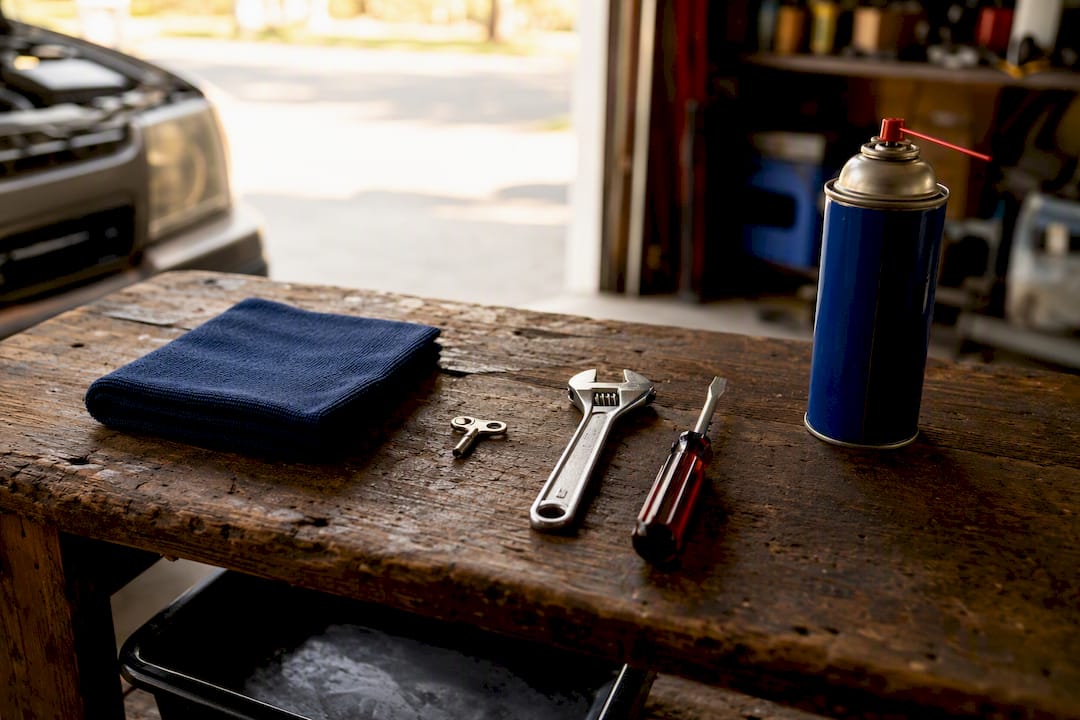
You don’t need a toolbox full of gear. A radiator bleed key does the job on older valves, while a flat-head screwdriver or Allen key handles most modern ones. Grab an old towel or two, a small container or jam jar to catch drips, and a pair of gloves if you’d rather not get system water on your hands.
Turn the heating off at the boiler or thermostat first, and wait until the radiators are properly cool to the touch. Bleeding while hot risks scalding and can pull more air back into the pipework instead of releasing it.
- Radiator key, or a flat-head screwdriver/Allen key for newer valves
- Old towels and a small container for drips
- Gloves, if you prefer to keep your hands clean
- Heating off, radiators cool, floor protected before you begin
While you’re down there, glance around the valve for damp patches, rust streaks or flaking paint. If you spot any of that, get a heating engineer to look before you go further.
Pro Tip: Keep a radiator key permanently in a kitchen drawer. It costs next to nothing, and you’ll never be caught out mid-winter searching for one while a radiator stays stubbornly cold.
Step-by-step: how to bleed a radiator safely
Bleeding itself only takes a minute or two per radiator once you’re set up; most of the time goes on preparation and waiting for things to cool down.
- Run a quick check first. With the heating on, feel each radiator top to bottom to identify which ones are cold at the top. Once you’ve noted the culprits, switch the heating off completely and give them time to cool.
- Set up your kit. Lay a towel underneath the bleed valve, usually a small square-ish fitting near the top corner of the radiator, and have your container ready to catch anything that escapes.
- Open the valve slowly. Fit the key or screwdriver and turn it a quarter turn anticlockwise. You should hear a hiss as trapped air escapes. Keep your face and hands away from the valve while it’s open.
- Close it the moment water appears. Once the hissing stops and a steady trickle of water follows, turn the valve clockwise straight away to close it firmly.
- Wipe up and move on. Dry off any spills, then repeat the process on any other radiators that showed symptoms. Finish by checking the boiler pressure gauge.
Don’t be alarmed if the water that comes out is dark or discoloured. It’s often magnetite, a rust byproduct that builds up inside older systems, and it stains fabric readily, so keep those towels underneath throughout.
A couple of things worth remembering while you work: never wind the bleed screw all the way out, since it can be fiddly to reseat and you risk it popping loose under pressure. And if a radiator still feels warm to the touch despite the heating being off, give it more time rather than opening the valve anyway.
Aftercare: check boiler pressure and restart the system
Releasing trapped air lowers the pressure in your heating system, and enough of a drop can make some boilers lock out altogether. Most combi boilers run at roughly 1.0 to 1.5 bar when cold, so check your gauge against that range once you’ve finished bleeding.
If the needle sits below the recommended zone, use the filling loop to top it back up, following your boiler’s own instructions since the exact procedure varies by make and model.
- Check the pressure gauge straight after bleeding, before you turn the heating back on
- Top up gradually using the filling loop if the reading is low, and stop once it’s in range
- Once restarted, feel every radiator you bled to confirm even heat, and glance around valves for fresh leaks
If bleeding doesn’t fix it: likely causes and when to call a pro
Bleeding solves trapped air, and nothing else. If a radiator is still cold after you’ve followed every step, the cause is probably something bleeding can’t touch: sludge or magnetite build-up inside the radiator, a stuck thermostatic valve, a struggling pump, or a leak that’s slowly bleeding the whole system of pressure.
Needing to bleed the same radiator over and over is the real warning sign. Air shouldn’t keep coming back in a sealed system, so repeat air is usually a symptom of a leak or a failing component rather than routine maintenance.
- Both radiator valves fully open, not just the thermostatic one
- Thermostatic valves turned fully on and off a few times to free them if they feel stiff
- Boiler pressure re-checked in case it’s dropped again since your last top-up
Call a heating engineer if pressure keeps falling, a radiator stays cold despite bleeding, or you see ongoing leaks or persistently dark water. A power flush or component replacement may be needed where sludge or a failed part is the real culprit.
Pro Tip: If one specific radiator keeps needing air let out every few weeks while the rest of the system behaves, suspect a leak at that radiator’s valve or joint rather than a system-wide fault.
How often to bleed radiators and simple preventive routines
Once a year, ideally just before the heating season starts, is a sensible baseline for most homes. Older systems, or ones that have needed bleeding before, benefit from a mid-winter check too.
- Feel radiators and listen for gurgling once a month through the colder months
- Bleed only the ones showing symptoms, not the whole house on a schedule
- Fix small leaks promptly and keep an eye on boiler pressure between services
Bleeding is genuinely a five-minute job when it’s needed. The trouble comes from ignoring it for months and running an inefficient system the whole time.
How to bleed a radiator without a radiator key
No key in the house? Most modern bleed valves take a flat-head screwdriver, and some accept a small Allen key or an adjustable spanner instead. Match the tool to the slot rather than forcing whatever’s closest, since a rounded-off valve is a genuine hassle to deal with later.
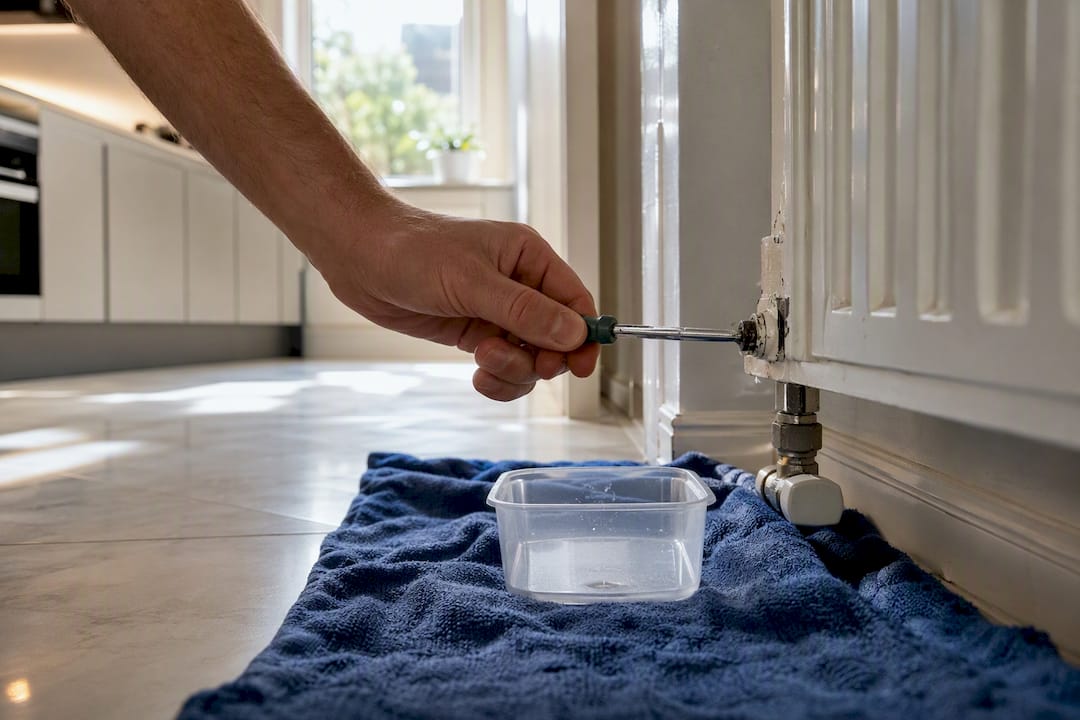
If the valve’s painted over or seized, a little penetrating oil and a gentle tap can free it. If it still won’t budge, stop and call a professional rather than risk snapping the fitting. Keep the same safety basics in play regardless of tool: heating off, towels down, container in place.
Supplier perspective: a short note from an experienced heating product supplier
Simco Direct supplies radiators and bathroom heating products, and this guide draws on that trade experience alongside published heating advice. One habit worth borrowing from tradespeople: keep a spare bleed key and a stack of old towels in a dedicated home toolkit, so bleeding never turns into a scramble for supplies. If a radiator turns out to be corroded or leaking rather than simply airlocked, replacement valves and towel radiators from a reputable supplier are usually the more sensible route than repeated patch-ups.
If bleeding shows the radiator is beyond repair, here’s what to do next
Sometimes bleeding reveals the real problem rather than solving it. Visible corrosion around the valve, a leak that won’t stop, or sludge so heavy that flushing doesn’t clear it are all signs the radiator itself, not just the air inside it, needs attention.

Simcodirect stocks replacement options built for exactly this moment, so you’re not stuck deciding between a leaking radiator and a full plumber-led refit. The Titan Chrome Straight Towel Radiator suits a bathroom upgrade where the old unit has corroded beyond saving, and the Platinum Chrome Electric Curved Towel Radiator is worth a look if you’d rather sidestep central heating faults altogether in that room. For anywhere reliant on a compatible valve, the Essential Manual Radiator Valve is a straightforward part to have on hand. Browse the range and pick what suits your system, or get in touch with Simcodirect for advice on the right fit before you buy.
Sources
- How to bleed a radiator – your step-by-step guide - British Gas
- How to bleed a radiator guide — The Independent
- How to bleed a radiator — Homebuilding